
Chang Sun Kim1*, Sung Yeon Lee1, Kyeong-Rok Kim1, Dae Ho Kim2, and Young-Nam Kwag2
1Forest Biodiversity Conservation Research Division, Korea National Arboretum, Pocheon 11186, Korea
2Forest Biodiversity Research Division, Korea National Arboretum, Pocheon 11186, Korea
*Correspondence to changsun84@korea.kr
Korean Journal of Mycology (Kor J Mycol) 2026 June, Volume 54, Issue 2, pages 191-205.
https://doi.org/10.4489/kjm.2026.54.2.9
Received on April 27, 2026, Revised on June 23, 2026, Accepted on June 23, 2026, Published on June 30, 2026.
Copyright © The Korean Society of Mycology.
This is an Open Access article which is freely available under the Creative Commons Attribution-Non-Commercial 4.0 International License (CC BY-NC) (https://creativecommons.org/licenses/by-nc/4.0/).
Cortinarius alpinus, Cortinarius falsosus, Cortinarius fulvopaludosus, Cortinarius lepidopus, Cortinarius scotoides, Pung-hyeol-ji
The genus Cortinarius (Cortinariaceae, Agaricales) is one of the most species-rich groups of ectomycorrhizal fungi worldwide [1,2]. Species of this genus form symbiotic associations with a wide range of woody plants and play essential roles in nutrient cycling and forest ecosystem functioning [2,3]. Despite their ecological importance, species delimitation within Cortinarius remains challenging due to considerable morphological variability and similarity among closely related taxa [4].
Recent advances in molecular phylogenetics, particularly analyses based on internal transcribed spacer (ITS) sequences, have significantly improved the resolution of species boundaries in Cortinarius [5,6]. Morphologically similar taxa often have distinct phylogenetic lineages, which highlights the importance of integrating molecular and morphological data for accurate identification [4,6].
Knowledge of Cortinarius diversity in South Korea is limited, and many species are likely under-documented [7]. Recent integrative taxonomic approaches of morphological observations in combination with molecular phylogenetic analyses have uncovered undocumented fungal taxa in Korea, such as ectomycorrhizal, and other macrofungal groups [8,9]. These findings suggest that fungal diversity in Korea is insufficiently documented, particularly in specialized or poorly investigated habitats.
Pung-hyeol-ji (wind-hole areas) are characterized by summer temperatures that are 2–5°C lower and humidity that is 10–20% higher than surrounding environments [10]. These habitats function as microrefugia that support the persistence of cold-adapted organisms [11]. However, their ecological significance for fungal communities remains poorly understood.
Several Cortinarius specimens were collected when major Pung-hyeol-ji areas and Mt. Odaesan (Gangwon-do) were surveyed during 2024. Preliminary findings suggested that some specimens have not been documented in South Korea.
We aimed to identify these specimens using morphological and molecular phylogenetic approaches and to document new Cortinarius species in South Korea. We also discuss the ecological significance of Pung-hyeol-ji habitats for ectomycorrhizal fungi.
Table 1 shows the specimens assessed herein. Dried specimens were deposited in the herbarium of the Korea National Arboretum (KH), South Korea. Macromorphological characteristics were derived from field notes and photographs of fresh basidiomata. The specimens were sectioned, hydrated and rehydrated, then mounted in 3% KOH to examine micromorphological structures using light microscopy. We measured the sizes of at least 30 mature spores
Table 1. List of Cortinarius specimens used in the phylogenetic analyses with their GenBank accession numbers
| Species | Voucher / Strain | Country | GenBank No. |
|---|---|---|---|
| Cortinarius scotoides | CFP542 | Sweden | MT935420 |
| Cortinarius scotoides | G:13312/166a (HT) | Switzerland | MT935421 |
| Cortinarius scotoides | BR:AdH19019 | Belgium | PX221224 |
| Cortinarius scotoides | HMAS291464 | China | MW555551 |
| Cortinarius scotoides | PC 604 | France | NR_171116 |
| Cortinarius scotoides | KA24-0830 | South Korea | PZ251246 |
| Cortinarius subscotoides | TN12-015 (HT) | Finland | MK211176 |
| Cortinarius badioflavidus | WTU:J.F. Ammirati 13668 (HT) | USA | KU041723 |
| Cortinarius badioflavidus | WTU:M.Beug 02MWB043009 | USA | KU041732 |
| Cortinarius hinnuleus | TUB 011512 | Germany | AY669665 |
| Cortinarius fulvopaludosus | ND98059 | Netherlands | PX221420 |
| Cortinarius fulvopaludosus | H6033460 (HT) | Finland | NR_154868 |
| Cortinarius fulvopaludosus | KA24-0850 | South Korea | PZ251247 |
| Cortinarius falsosus | T. Niskanen 02-866 | Finland | MT935041 |
| Cortinarius falsosus | PC:3886 (HT) | France | MT935040 |
| Cortinarius falsosus | KA24-1195 | South Korea | PZ251250 |
| Cortinarius decipiens | ND21123 | Netherlands | PX221594 |
| Cortinarius castaneus | FK10M | Italy | PZ016049 |
| Cortinarius miwok | DBB43810 (HT) | USA | JQ906753 |
| Cortinarius hemitrichus | TUB 011509 | Germany | AY669680 |
| Cortinarius paleaceus | CFP662 | Sweden | MT935265 |
| Cortinarius flexipes | TUB 011903 | Germany | AY669683 |
| Cortinarius uraceus | IK01-002 | Finland | KJ206526 |
| Cortinarius bivelus | TUB 011897 | Germany | AY669682 |
| Cortinarius saturninus | CFP514 | Sweden | KX964584 |
| Cortinarius torvus | TUB 011515 | Germany | AY669668 |
| Cortinarius armeniacus | CFP809 | Sweden | DQ117925 |
| Cortinarius tortuosus | Niskanen 05-00 | Finland | KX964408 |
| Cortinarius brunneus | IK00-012 (HT) | Finland | EU266642 |
| Cortinarius evernius | Niskanen 05-238 | Norway | KX964351 |
| Cortinarius bovinaster | CFP1656 | Sweden | JX407266 |
| Cortinarius bovinus | TUB 011898 | Germany | AY669691 |
| Cortinarius alpinus | KA24-1375 | South Korea | PZ251251 |
| Cortinarius alpinus | KA24-1145 | South Korea | PZ251249 |
| Cortinarius alpinus | OF146214 | Norway | KX239916 |
| Cortinarius mucosus | TUB 011837 | Germany | AY669591 |
| Cortinarius collinitus | TUB 011832 | Germany | AY669588 |
| Cortinarius violaceus | S Moser 74/208 (HT) | Sweden | NR_173726 |
| Cortinarius salor | TUB 011838 | Germany | AY669592 |
| Cortinarius lepidopus | KA24-1135 | South Korea | PZ251248 |
| Cortinarius lepidopus | LE315536 | Russia | MN308207 |
| Cortinarius lepidopus | DB6253 | Hungary | MZ663794 |
| Cortinarius lepidopus | HMJAU48640 | China | ON254480 |
| Cortinarius modestus | NYS:F001966 (HT) | USA | MZ580446 |
| Cortinarius modestus | Niskanen 10-035 | Canada | MZ580447 |
| Cortinarius anomalovelatus | JFA13109 (HT) | USA | FJ717605 |
| Cortinarius caninus | H:7022441 | Sweden | KX302251 |
| Cortinarius barlowensis | JFA13140 (HT) | USA | FJ717554 |
| Cortinarius anomalus | Lindstrom 00.230 | Switzerland | KX302231 |
| Cortinarius suecicolor | PDD:74698 (HT) | New Zealand | JX000360 |
| Cortinarius illuminus | ND18030 | Sweden | PX220941 |
| Cortinarius obtusus | ND19045 | Norway | PX220965 |
| Cortinarius tubarius | TUB 011821 | Germany | AY669581 |
| Cortinarius sanguineus | SL22091940 (NT, outgroup) | Sweden | NR_119967 |
Recently documented sequences are shown in bold. HT, holotype; NT, neotype.
Genomic DNA was extracted from dried basidiomata using a modification of the cetyltrimethylammonium bromide (CTAB) method as described [12]. The ITS region was amplified by PCR using 0.5 pmol each of ITS1F [13] and ITS4 [14] primer pairs, 0.25 mM dNTPs, 10 mM Tris-HCl, 50 mM KCl, 1.5 mM MgCl2, 2.5 U of Taq DNA polymerase, and ~ 15 ng of template DNA. The PCR cycling conditions comprised initial denaturation at 94°C for 4 min, followed by 34 cycles of 94°C for 40 s, 52°C for 40 s, and 72°C for 60 s, and a final extension at 72°C for 8 min. We purified and directly sequenced the amplicons using ExoSAP kits (USB Corp., Cleveland, OH, USA) and BigDye Terminator Cycle Sequencing Kits (Applied Biosystems, Foster City, CA, USA) and capillary electrophoresis using an ABI Prism 310 Genetic Analyzer (Applied Biosystems). The sequences were edited using Phydit 3.2 [15].
The ITS sequences were aligned using ClustalX 1.8 [16] and manually adjusted. Maximum likelihood (ML) analysis was applied using RAxML v8.2.12 [17] under the GTRGAMMA model with 1,000 bootstrap replicates. Bayesian inference (BI) was analyzed using MrBayes v3.2.7 [18] under the GTR+I+G substitution model with two independent runs of four Markov chains per 5 million generations. Trees were sampled every 1,000 generations, and the first 25% of trees were discarded as burn-in. Bayesian posterior probabilities were calculated from the remaining trees. Cortinarius sanguineus UPS SL22091940 served as the outgroup. The phylogenetic tree was visualized using TreeView v3.2 [19].
Phylogenetics were analyzed based on ITS sequences comprising 53 taxa and 509 aligned characters. The dataset included both new, and reference sequences retrieved from GenBank (Table 1). Analyses of maximum likelihood and Bayesian inference resulted in congruent tree topologies. The phylogenetic tree revealed that all the examined specimens were distributed among several clades that corresponded to known Cortinarius species (Fig. 1).
Specimens KA24-1145 and KA24-1375 were grouped within the C. alpinus clade with strong support (100/1.0). Specimen KA24-1195 was placed in the C. falsosus clade (97/1.0), and KA24-0850 was assigned to the C. fulvopaludosus clade (87/0.98) along with the type-derived sequence H6033460 (NR_154868), despite moderate internal node support (68/0.97). Specimen KA24-1135 formed a distinct lineage within the C. lepidopus clade (88/1.0), and was clearly separated from closely related taxa within the C. anomalus complex. Specimen KA24-0830 was clearly supported within the C. scotoides clade (99/1.0) and was distinguishable from the closely related C. subscotoides.
Overall, none of the examined specimens formed independent lineages, indicating that all specimens corresponded to known species. Combined molecular and morphological evidence supports their recognition as recently documented taxa in South Korea.

Fig. 1. Phylogenetic tree of Cortinarius species inferred from internal transcribed spacer (ITS) sequence data. The tree was constructed using maximum likelihood (RAxML) and Bayesian inferences (BI) methods. Bootstrap support values (≥ 50%) from RAxML and posterior probabilities (≥ 0.90) from Bayesian analysis are indicated at nodes as ML/BI. New sequences determined are shown in bold red. Cortinarius sanguineus UPS SL22091940 served as the outgroup. HT and NT, sequences derived from holotype and neotype specimens, respectively. Scale bar indicates the number of substitutions per site.
Cortinarius alpinus Boud.,Bull. Soc. Mycol.Fr. 11:27, tab. 11 (1895). Fig. 2.
Korean name: Gosan-kkeunjeock-beoseot (고산끈적버섯), the name refers to its alpine habitat (“alpinus”).
Description: Basidiomata medium-sized. Pileus diameter, 20–50 mm; convex to plano-convex, smooth surface, weakly viscid to nearly dry, brown to orange-brown, often slightly darker at the center. Lamellae adnate to slightly emarginate, moderately spaced, pale brown to brown. Stipe 50–70 × 3–15 mm, cylindrical to slightly clavate, surface fibrillose, pale yellowish to brownish, with remnants of Cortina in young basidiomata. Basidiospores ellipsoid to subamygdaliform, verrucose, (7.8–)8.2–9.8(–10.5) × (4.5–)4.8–5.8(–6.3) μm, Q = (1.40–)1.50–1.85(–1.95); Qm = 1.67. Basidia clavate, 4-spored, 28–35 × 7–9 μm. Cheilocystidia and pleurocystidia were not found. Pileipellis has a weakly hyaline to pale brown color, a gelatinized cutis consisted of repent, cylindrical hyphae, and is smooth-walled.
Habitat: Typically found in alpine or subalpine environments, often associated with dwarf shrubs or conifers.
Specimens examined: South Korea, Gangwon-do, Pyeongchang-gun, Jinbu-myeon, Singi-ri, Bakjigol Pung-hyeol-ji, 37°35′0.3″N, 128°35′21.10″E, elev. 894 m, 24 Sep 2024, KA24-1145 (KH); Pyeongchang-gun, Daegwallyeong-myeon, Byeongnae-ri, Mt. Odaesan, 37°44′33″N, 128°38′14″E, elev. 853 m, 27 Oct 2024, KA24-1375 (KH).
Notes: Cortinarius alpinus formed a strongly supported clade (100/1.0) including the KA24-1375 and KA24-1145 specimens that belonged to Cortinarius subgenus Myxacium section Myxacium. It is known mainly to thrive in arctic, alpine, and subalpine habitats, often in association with dwarf willows such as Salix retusa, S. reticulata, S. herbacea, S. polaris, S. rotundifolia, and Dryas spp. [20]. Peintner [20] treated C. favrei as a synonym of C. alpinus and identified highly variable basidiospore sizes in this taxon. Although Boudier originally described C. alpinus as having basidiospores of 16–20 × 7–9 μm [21], Peintner [20] re-evaluated these sizes and corrected the measure values to 14–18 × 6–8 μm. Based on 992 spores from 32 collections, Peintner [20] reported a broad spore range of 9.6–17.5 × 5.6–9.7 μm, with a mean of 12.6 ± 1.2 × 7.4 ± 0.7 μm. The Korean specimens examined herein had somewhat smaller basidiospores, (7.8–)8.2–9.8(–10.5) × (4.5–)4.8–5.8(–6.3) μm, overlapping only with the lower end of the variation reported for C. alpinus. However, the sizes of C. alpinus spores vary considerably and are sufficient alone to delimit taxa within the C. alpinus complex. Thus, the Korean specimens were identified as C. alpinus based primarily on their ITS phylogenetic placement, together with their overall morphological agreement, including brown to orange-brown basidiomata, a weakly viscid pileus, and their presence in cool montane or wind-hole habitats. The smaller spores in the Korean collections are therefore interpreted as intraspecific variations within C. alpinus.
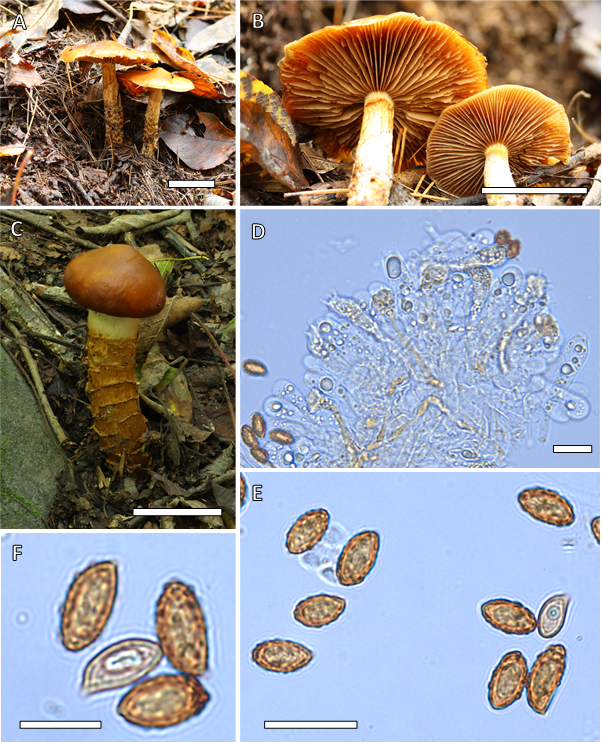
Fig. 2. Cortinarius alpinus. A, B: mature basidiomata (KA24-1375). C: immature basidioma (KA24-1145). D: basidia mounted in KOH. E, F: basidiospores mounted in KOH. Scale bars: A–C, 3 cm; D, E, 20 μm; F, 10 μm.
Cortinarius falsosus Moënne-Locc. & Reumaux, in Bidaud, Moënne-Loccoz, Reumaux, Carteret & Eyssartier, Atlas des Cortinaires (Meyzieu) 11:572 (2001). Fig. 3.
Korean name: Yusa-kkeunjeok-beoseot (유사끈적버섯), the name is derived from the species epithet “falsosus”, meaning “false” or “resembling another,” indicating its morphological similarity to closely related species within the genus.
Description: Basidiomata are small and slender. Pileus 15–20 mm in diameter, conical to convex, hygrophanous, dark brown when moist, pales upon drying, finely fibrillose surface. Lamellae are moderately spaced, brown. Stipes are 45–50 × 2.5–3 mm, long and slender, cylindrical, pale to brownish, and a surface that is smooth to finely fibrillose. Basidiospores ellipsoid to amygdaliform, verrucose, (6.5–)6.8–8.5(–9.0) × (3.8–)4.2–5.0(–5.5) μm, Q = (1.45–)1.55–1.90(–2.05), Qm = 1.70. Basidia clavate, 4-spored, 25–32 × 6–8 μm. Cheilocystidia and pleurocystidia were not evident. The pileipellis consists of a repent cutis, cylindrical hyphae, thin-walled, hyaline to pale brown, without evident gelatinization.
Habitat: On soil in forest habitats, frequently associated with deciduous trees.
Specimens examined: South Korea, Gangwon-do, Hwacheon-gun, Sangseo-myeon, Bongo-ri, Bongo-ri Pung-hyeol-ji, 38°12′25.60″N, 127°35′44.80″E, elev. 357 m, 27 Sep 2024, KA24-1195 (KH).
Notes: Cortinarius falsosus was placed within a supported clade (97/1.0) together with reference sequences. It is phylogenetically distinct from closely related taxa such as C. decipiens and C. castaneus, which occur in adjacent lineages. Species boundaries among small brown Cortinarius species are often difficult to delimit based solely on morphology, and DNA-based approaches are essential for accurate identification [6]. The phylogenetic placement of the specimen KA24-1195 within the C. falsosus clade supports its assignment to this species. Morphologically, C. falsosus can be distinguished from C. decipiens by differences in pileus coloration and basidiospore ornamentation, and from C. castaneus by its smaller basidiomata and spore dimensions. The examined specimen is consistent with described characteristics of C. falsosus.
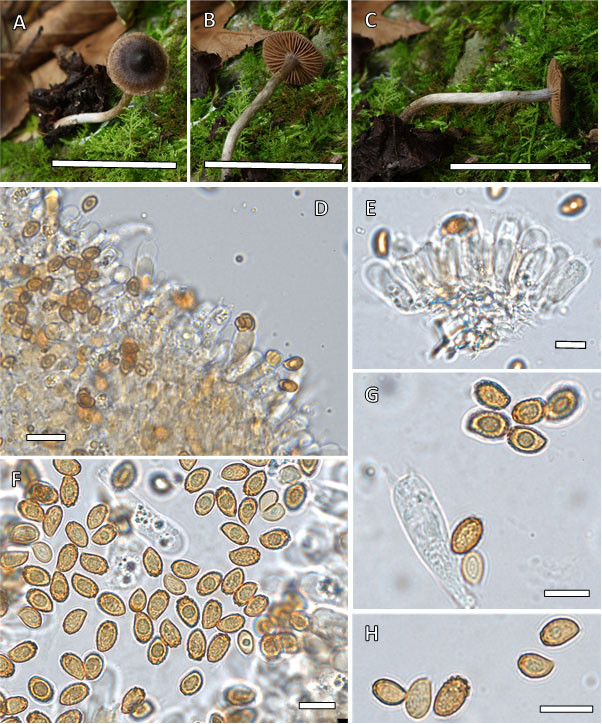
Fig. 3. Cortinarius falsosus. A–C: mature basidioma (KA24-1195). D, E: basidia mounted in KOH. F–H: basidiospores mounted in KOH. Scale bars: A–C, 3 cm; D, E, 20 μm; F–H, 10 μm.
Cortinarius fulvopaludosus Kytöv., Niskanen & Liimat., in Liimatainen, Index Fungorum 344:1 (2017). Fig. 4
Korean name: Hwanggalseupji-kkeunjeok-beoseot (황갈습지끈적버섯), the name is based on its yellowish-brown color and wetland habitat (“fulvo” + “paludosus”).
Description: Small medium basidiomata. Pileus ca. 15–20 mm in diameter, convex, distinctly hygrophanous, fulvous to reddish-brown, surface smooth and slightly viscid when moist. Lamellae are moderately spaced and pale brown to cinnamon-brown. Stipe ca. 40–70 × 4–5 mm, slender, elongated, often slightly curved, pale brown to orange-brown, surface smooth. Basidiospores ellipsoid to slightly amygdaliform, verrucose, (6.8–)7.2–8.8(–9.5) × (4.0–)4.3–5.2(–5.8) μm, Q = (1.40–)1.50–1.75(–1.90), Qm = 1.63. Basidia clavate, 4-spored, 25–35 × 6–9 μm. Cheilocystidia and pleurocystidia not observed. Pileipellis a weakly to moderately gelatinized cutis, composed of repent hyphae embedded in a gelatinous matrix, hyaline to pale brown.
Habitat: Typically moist or wet forest environments, often associated with broadleaf trees.
Specimens examined: South Korea, Gangwon-do, Hwacheon-gun, Sangseo-myeon, Bongo-ri, Bongo-ri Pung-hyeol-ji, 38°12′32.82″N, 127°35′42.84″E, elev. 373 m, 23 Aug 2024, KA24-0850 (KH).
Notes: Cortinarius fulvopaludosus was recovered within the corresponding clade (87/0.98), although internal node support was moderate (68/0.97). The ITS sequence of KA24-0850 was 99.4% similar to the closest reference sequences of C. fulvopaludosus H6033460 (NR_154868), differing only by 3 nucleotide positions among 509 aligned sites. It is phylogenetically related to taxa such as C. hinnuleus and allied species within the Telamonia group. The resolution of ITS-based phylogenies might be limited in certain Cortinarius lineages, particularly among closely related, brown-spored taxa [6]. Therefore, moderate support values at internal nodes are common in this group. Morphologically, C. fulvopaludosus can be distinguished from C. hinnuleus by its more hygrophanous pileus, finer fibrillose surface, and different basidiospore size and ornamentation. Despite moderate internal support, the position of KA24-0850 within the C. fulvopaludosus clade, together with its morphological agreement, supports its identification.
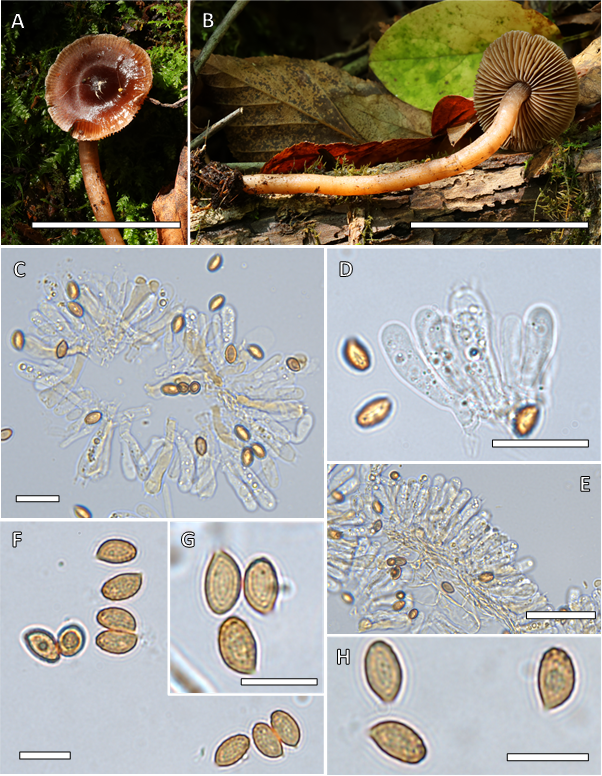
Fig. 4. Cortinarius fulvopaludosus. A, B: mature basidioma (KA24-0850). C–E: basidia and F, H: basidiospores mounted in KOH. Scale bars: A, B, 3 cm; C–E, 20 μm; F, H, 10 μm.
Cortinarius lepidopus Cooke, Grevillea 16(no. 78): 43 (1887), Fig. 5.
Korean name: Inpyeon-kkeunjeok-beoseot (인편끈적버섯), the name refers to its scaly or fibrillose pileus surface (“lepidopus”).
Description: Medium-sized basidiomata. Pileus diameter, 40–50 mm, convex to plano-convex, pale brown to grayish-brown, surface dry, smooth to finely fibrillose. Lamellae adnate to slightly emarginate, pale brown. Stipe ca. 60–75 × 3–8 mm, long and slender, cylindrical, whitish to pale brown, surface smooth to finely fibrillose. Basidiospores broadly ellipsoid to sub amygdaliform, verrucose, (6.8–)7.2–8.6(–9.2) × (5.2–)5.5–6.8(–7.5) μm, Q = (1.10–)1.20–1.50(–1.65), Qm = 1.32. Basidia clavate, 4-spored, 30–40 × 7–10 μm. Cheilocystidia and pleurocystidia were not evident. The pileipellis cutis is composed of parallel, repent hyphae, smooth-walled, pale brown, lacking gelatinization.
Habitat: In forest soils, often associated with trees in temperate regions.
Specimens examined: South Korea, Gangwon-do, Pyeongchang-gun, Jinbu-myeon, Singi-ri, Bakjigol Pung-hyeol-ji, 37°35′0.30″N, 128°35′21.10″E, elev. 894 m, 24 Sep 2024, KA24-1135 (KH).
Notes: Cortinarius lepidopus was recovered as a distinct lineage (88/1.0) and is closely associated with members of the C. anomalus complex, including C. anomalus, C. modestus, and C. anomalovelatus. Recent phylogenomic studies have demonstrated that Cortinariaceae comprises multiple distinct evolutionary lineages and that species boundaries within the Telamonia clade remain difficult to resolve due to high morphological variability and limited resolution of ITS sequences alone [4,6]. Index Fungorum and Species Fungorum treat C. lepidopus in synonym with C. anomalus, whereas MycoBank maintains C. lepidopus as a separate taxon. This discrepancy reflects ongoing taxonomic uncertainty about the C. anomalus complex. However, our phylogenetic analysis showed that C. lepidopus formed a supported and independent lineage, indicating that it is a distinct taxon. Morphologically, it is characterized by a fibrillose to squamulose pileus surface and moderately verrucose basidiospores, distinguishing it from related taxa. The examined specimen (KA24-1135) agrees well with the known characteristics of this species. Therefore, we retained the name C. lepidopus in this study based on both phylogenetic evidence and morphological consistency.
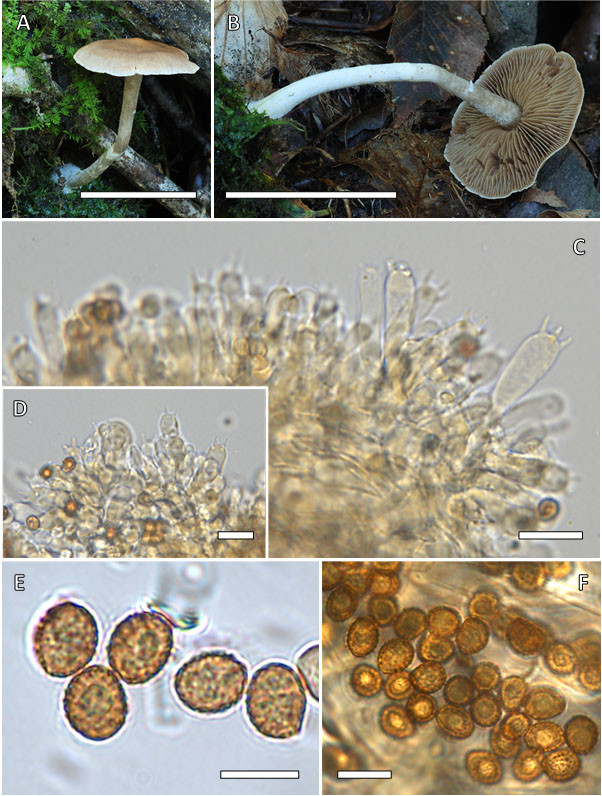
Fig. 5. Cortinarius lepidopus. A, B: mature basidioma (KA24-1135). C, D: basidia and E, F: basidiospores mounted in KOH. Scale bars: A, B, 3 cm; C, D, 20 μm; E, F, 10 μm.
Cortinarius scotoides J. Favre, Ergebn. Wiss. Unters. Schweiz. NatnParks 5(no. 33): 146, 204 (1955), Fig. 6.
Korean name: Heukgal kkeunjeok beoseot (흑갈끈적버섯), the name reflects its dark brown coloration (“scotoides”).
Description: Basidiomata are small, with a pileus with 15–30 mm-diameter, convex, brown to dark brown, distinctly hygrophanous, surface smooth. Lamellae moderately spaced, brown. Stipe ca. 40–50 × 2–4 mm, slender, cylindrical, pale brown, surface finely fibrillose. Basidiospores ellipsoid to slightly amygdaliform, finely verrucose, (6.5–)6.8–8.2(–8.8) × (3.8–)4.0–4.8(–5.2) μm, Q = (1.45–)1.55–1.85(–1.95), Qm = 1.68. Basidia clavate, 4-spored, 25–32 × 6–8 μm. Cheilocystidia and pleurocystidia were not evident. Pileipellis a cutis to weakly gelatinized cutis, composed of slender, repent hyphae, hyaline to pale brown.
Habitat: Soil in forested habitats, often associated with deciduous or mixed forests.
Specimens examined: South Korea, Gangwon-do, Jeongseon-gun, Bukpyeong-myeon, Jangyeol-ri, Jangyeol-ri Pung-hyeol-ji, 37°27′06.60″N, 128°41′05.34″E, elev. 353 m, 21 Aug 2024, KA24-0830 (KH).
Notes: Cortinarius scotoides was supported within its clade (99/1.0) and was clearly separated from the closely related C. subscotoides, which forms a sister lineage in the phylogenetic tree. Morphologically similar taxa within Cortinarius might represent distinct evolutionary lineages, highlighting the importance of molecular data in species delimitation [4,6]. The clear separation between C. scotoides and C. subscotoides in our analysis supports their recognition as independent species. Morphologically, C. scotoides can be distinguished from C. subscotoides by slightly smaller basidiospores and differences in pileus texture and coloration. We therefore assigned specimen (KA24-0830) to C. scotoides, based on the phylogenetic placement and the morphological agreement.
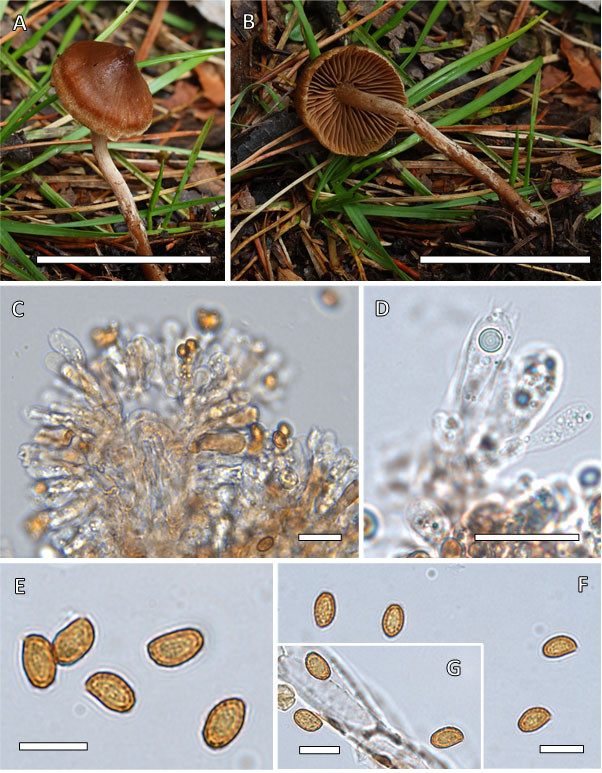
Fig. 6. Cortinarius scotoides. A, B: mature basidioma (KA24-0830). C, D: basidia and E–G: basidiospores mounted in KOH. Scale bars: A, B, 3 cm; C, D, 20 μm; E–G, 10 μm.
A diagnostic key based on combined macromorphological and micromorphological characteristics is provided below.
1. Pileus distinctly hygrophanous or viscid when moist: 2
1’. Pileus dry or only weakly hygrophanous: 3
2. Basidiospores moderately elongated (Qm ~1.6); pileus fulvous to reddish-brown: C. fulvopaludosus
2’. Basidiospores more elongated (Qm ≥1.7); pileus dark brown: C. falsosus
3. Basidiospores relatively broad (Qm ~1.3): C. lepidopus
3’. Basidiospores more elongated (Qm >1.5): 4
4. Basidiospores relatively small (mostly <8.5 μm): C. scotoides
4’. Basidiospores larger (often >9 μm): C. alpinus
This study confirmed five Cortinarius species, C. alpinus, C. falsosus, C. fulvopaludosus, C. lepidopus, and C. scotoides, as newly recorded in South Korea based on integrated morphological and molecular evidence. All examined specimens were placed within clades corresponding to known described species, indicating that they represent previously unknown components of the Korean mycobiota rather than novel taxa.
Species identification within Cortinarius remains challenging because many taxa have overlapping macromorphological characters and substantial phenotypic variability [4,6]. We used diagnostic morphological characteristics such as pileus texture and hygrophany, basidiospore size and shape, and pileipellis structure to identify each species. Cortinarius alpinus was characterized by brown to orange-brown basidiomata, a weakly viscid pileus, and a position within a supported C. alpinus clade, although the Korean specimens had somewhat smaller basidiospores than those generally reported for the species [20]. Cortinarius scotoides was distinguished from the closely related C. subscotoides by its smaller basidiospores and dark hygrophanous basidiomata. Cortinarius falsosus and C. fulvopaludosus belong to morphologically similar, brown-spored lineages, in which reliable identification based solely on macromorphology is difficult. Therefore, ITS phylogenetic evidence was essential for confirming species boundaries.
Similar integrative taxonomic studies have recently discovered hitherto unknown fungal taxa in Korea, including ectomycorrhizal [8] and other macrofungal groups [9]. The present and previous findings indicate that the diversity of Korean macrofungi is underestimated and that combined morphological and molecular approaches are essential for reliable species identification.
Most species described herein were collected from Pung-hyeol-ji habitats. These sites are cooler and more humid than surrounding forests and are established as microrefugia for cold-adapted organisms [10,11]. Among the species described herein, C. alpinus, C. falsosus, C. fulvopaludosus, and C. scotoides, are primarily associated with boreal, subalpine, alpine, or Salix-dominated habitats in the Northern Hemisphere. Their presence in Korean Pung-hyeol-ji habitats suggests that these environments function as local climatic refugia for ectomycorrhizal fungi with northern affinities. Similar ecological functions have been proposed for wind-hole ecosystems supporting relict plants and other cold-adapted organisms.
Overall, our findings expand the known distribution of Cortinarius species in South Korea and highlight the ecological significance of Pung-hyeol-ji habitats as potential refugial environments for ectomycorrhizal fungi under ongoing climate change.
The authors declare that they have no potential conflict of interest.
This study was supported by a research fund from the Korea National Arboretum (project no. KNA1-4-1-23-5).
1. Kirk PM, Cannon PF, Minter DW, Stalpers JA. Dictionary of the fungi. 10th ed. Wallingford: CABI; 2008.
2. Tedersoo L, Bahram M, Põlme S, Kõljalg U, Yorou NS, Wijesundera R, Ruiz LV, Vasco-Palacios AM, Thu PQ, Suija A, et al. Global diversity and geography of soil fungi. Science 2014;346:1256688. https://doi.org/10.1126/science.1256688
[DOI][PubMed][PMC]
3. Smith SE, Read DJ. Mycorrhizal symbiosis. 3rd ed. London: Academic Press; 2008. https://doi.org/10.1016/B978-0-12-370526-6.X5001-6
[DOI]
4. Liimatainen K, Kim JT, Pokorny L, Kirk PM, Dentinger B, Niskanen T. Taming the beast: A revised classification of Cortinariaceae based on genomic data. Fungal Divers 2022;112:89-170. https://doi.org/10.1007/s13225-022-00499-9
[DOI]
5. Garnica S, Weiß M, Oertel B, Oberwinkler F. A framework for a phylogenetic classification in the genus Cortinarius (Basidiomycota, Agaricales) derived from morphological and molecular data. Can J Bot 2005;83:1457-77. https://doi.org/10.1139/b05-107
[DOI]
6. Liimatainen K, Niskanen T, Dima B, Kytövuori I, Ammirati JF, Frøslev TG. The largest type study of Agaricales species to date: Bringing identification and nomenclature of Phlegmecium (Cortinarius) into the DNA era. Persoonia 2014;33:98-140. https://doi.org/10.3767/003158514X684681
[DOI][PubMed][PMC]
7. National Institute of Biological Resources. National list of species of Korea [Internet]. Incheon: NIBR; 2025 [cited 2026 Apr 26]. Available from https://www.kbr.go.kr/content/view.do?menuKey=799&contentKey=174
8. Cho SE, Kwag YN, Han SK, Lee DH, Kim CS. Two new records of Scleroderma species (Sclerodermataceae, Boletales) in South Korea. Kor J Mycol 2022;50(2):115-23. https://doi.org/10.4489/KJM.20220011
[DOI]
9. Kim DH, Kwag YN, Kim HS, Kim CS, Lee JK. First Korean records of Scutellinia sinosetosa and S. subhirtella (Pezizales, Pyronemataceae) based on integrative taxonomy. Kor J Mycol 2025;53(4):363-71. http://doi.org/10.4489/kjm.2025.53.4.13
[DOI]
10. Kim KR, Lee SY, Lee DH, Shin HT, Kim CS, An JB. A study on the environmental and microclimatic characteristics for supporting conservation of wind-holes. Korean J Environ Ecol 2025;39(6):597-610. https://doi.org/10.13067/KJEE.2025.39.6.597
[DOI]
11. Hampe A, Jump AS. Climate relicts: Past, present, future. Annu Rev Ecol Evol Syst 2011;42:313-33. https://doi.org/10.1146/annurev-ecolsys-102710-145015
[DOI]
12. Doyle JJ, Doyle JL. A rapid DNA isolation procedure for small quantities of fresh leaf tissue. Phytochem Bull 1987;19:11-5.
13. Gardes M, Bruns TD. ITS primers with enhanced specificity for basidiomycetes – application to the identification of mycorrhizae and rusts. Mol Ecol 1993;2:113-8. https://doi.org/10.1111/j.1365-294x.1993.tb00005.x
[DOI][PubMed]
14. White TJ, Bruns TD, Lee SB, Taylor JW. Amplification and direct sequencing of fungal ribosomal RNA genes for phylogenetics. In: Innis MA, Gelfand DH, Sninsky JJ, White TJ, editors. PCR protocols: A guide to methods and applications. San Diego: Academic Press; 1990. p. 315-22. https://doi.org/10.1016/B978-0-12-372180-8.50042-1
[DOI][PubMed][PMC]
15. Chun J. Computer-assisted classification and identification of actinomycetes [dissertation]. Seoul: Seoul National University; 1995.
16. Thompson JD, Gibson TJ, Plewniak F, Jeanmougin F, Higgins DG. The CLUSTAL_X windows interface: Flexible strategies for multiple sequence alignment aided by quality analysis tools. Nucleic Acids Res 1997;25:4876-82. https://doi.org/10.1093/nar/25.24.4876
[DOI][PubMed][PMC]
17. Stamatakis A. RAxML version 8: A tool for phylogenetic analysis and post-analysis of large phylogenies. Bioinformatics 2014;30:1312-3. https://doi.org/10.1093/bioinformatics/btu033
[DOI][PubMed][PMC]
18. Ronquist F, Huelsenbeck JP. MrBayes 3: Bayesian phylogenetic inference under mixed models. Bioinformatics 2003;19:1572-4. https://doi.org/10.1093/bioinformatics/btg180
[DOI][PubMed]
19. Page RD. TreeView: An application to display phylogenetic trees on personal computers. Comput Appl Biosci 1996;12:357-8. https://doi.org/10.1093/bioinformatics/12.4.357
[DOI][PubMed]
20. Peintner U. Cortinarius alpinus as an example for morphological and phylogenetic species concepts in ectomycorrhizal fungi. Sommerfeltia 2008;31:161-77. https://doi.org/10.2478/v10208-011-0009-1
[DOI]
21. Boudier E. Description de quelques nouvelles espèces de champignons récoltées dans les régions élevées des Alpes du Valais, en août 1894. Bull Soc Mycol Fr 1895;11:27-30.